Showing Posts From
Dubbing

Dubbed Video Podcasts: How to Take Your Podcast to a Global Audience
When I started my podcast three years ago, I only spoke Italian. Good community, great feedback, but always that feeling of leaving money on the table. The turning point? When I started dubbing the best video clips from my show into English, Spanish, and Portuguese. In six months, my downloads grew by 340%. I'm not exaggerating—I have the numbers to prove it. 🎙️ Why Dubbed Video Podcasts Beat Subtitles Most podcasters wanting to expand internationally immediately think of subtitles. It makes sense: they're cheap, fast, and technically simple. The problem? People don't watch subtitles on social media. Here's what I learned in the field:On TikTok and Instagram Reels, users scroll at insane speeds. If they have to read, they skip. On YouTube Shorts, 80% of viewers watch without audio for the first 3 seconds—then turn on audio only if the content hooks them. If they hear a language they don't understand, they're gone. Engagement drops 60-70% when you use subtitles instead of native dubbing (data from my January 2026 analytics).Dubbing creates the illusion of native content. Spanish audiences think you speak Spanish. Brazilian audiences think you're Brazilian. And that changes everything.**Creator pro tip:** You don't need to dub entire episodes. Focus on 30-90 second clips with your strongest moments. Those are your "Trojan horses" to conquer new audiences.🚀 The Video Podcast Boom in 2026 It's not just me. Industry numbers speak clearly:68% of the top 100 podcasts on Spotify now also produce video content (Q4 2025 data) YouTube has surpassed Spotify as the podcast listening platform for Gen Z (source: Edison Research 2026) TikTok and Instagram Reels introduced specific algorithms for podcast clips—if you tag correctly, organic exposure is insaneThe video podcast format exploded because:It humanizes the creator: people see your face, your expressions. You connect emotionally. It works on social feeds: a 45-second clip can go viral even if your podcast has 200 listeners. Multiple monetization: YouTube + Spotify + direct sponsorships + affiliate links in description.But there's a problem: most podcasters produce content only in their native language, cutting themselves off from 80% of the global market.💡 Why Dubbing Wins Over Text Localization I tried both approaches. First subtitles in 5 languages, then AI dubbing. The difference was brutal. Metrics Comparison (December 2025 vs January 2026)Metric Subtitles (EN/ES/PT) Dubbing (EN/ES/PT) DifferenceView Rate (first 3 sec) 42% 78% +86%Completion Rate 18% 51% +183%Shares 340 1,240 +265%Profile Clicks 89 412 +363%New Followers/Month 210 890 +324%The data is crystal clear: dubbing converts, subtitles don't. Why? Three psychological reasons:Zero cognitive friction: the brain doesn't have to do the extra work of reading + watching + listening. Just watching + listening. Immediate trust: hearing "your" voice in perfect Spanish creates a sense of authenticity that subtitles can't replicate. Algorithm-friendly: social platforms reward completion rate and rewatches. Dubbing performs better on both.**Technical note:** Modern AI voices (like those from ElevenLabs used by [NovaDub](https://www.novadub.ai)) have intonation, pauses, and micro-expressions that sound 95% natural. It's not robotic like you thought.📝 Strategy: How to Select the Right Clips Not every moment from your podcast deserves to become multilingual content. Here's my framework for choosing what to dub: "Golden Clips" CriteriaOptimal duration: 30-90 secondsUnder 30 seconds: too brief to deliver value Over 90 seconds: attention drops drasticallyStrong hook in the first 3 secondsProvocative question Surprising statistic Controversial statement Explicit promise ("I'll show you how...")Narrative autonomyThe clip must make sense without context from the full episode Must have a clear beginning, development, and conclusionUniversal appealAvoid hyper-local references (Italian politics, regional events, etc.) Choose themes that resonate across all target culturesMy Production Workflow Here's how I work every week:Record the episode (video format, always—even if I later distribute it as audio-only) During editing, mark timestamps of strong moments (I use Descript for this) Export 3-5 clips of 45-60 seconds each Upload to NovaDub: I choose EN, ES, PT as target languages Download dubbed files (processing time: ~3-5 minutes per clip) Scheduled upload: Italian version: TikTok, Instagram Reels, YouTube Shorts English version: same channels, but with EN hashtags Spanish version: same, with ES/LATAM hashtag strategy Portuguese version: focus on Brazilian audienceTotal time to process 4 clips in 4 languages: about 30 minutes. I produce 16 pieces of content in half an hour.**Common mistake:** Don't try to dub entire episodes at first. It costs too much (in time and money) and you don't need it. Short clips give 10x more ROI.📊 Case Study: From 500 to 2,100 Downloads/Month I want to be transparent with the numbers. This is exactly what happened to my podcast when I introduced the dubbed video clip strategy. Before (June-November 2025)Language: Italian only Content: Audio only on Spotify + Apple Podcasts Downloads/month: ~480-520 Geographic audience: 94% Italy, 6% other countries (Italians abroad)After (December 2025-January 2026)Languages: IT, EN, ES, PT Content: Audio podcast + 12-16 dubbed video clips/month Downloads/month: 2,140 (January 2026) Geographic audience: 38% Italy, 27% USA/UK, 18% Spain/LATAM, 12% Brazil, 5% otherGrowth Breakdown by ChannelChannel Before After NotesTikTok (IT) 1.2K followers 3.8K followers Same strategy, IT videos onlyTikTok (EN) 0 5.1K followers New account, EN content onlyInstagram Reels 890 followers 4.2K followers IT/EN/ES mix with language in captionYouTube Shorts 340 subscribers 2.1K subscribers Separate playlists per languageSpotify (new listeners) ~50/month ~340/month Traffic from social videosMost important data: Cost of acquisition per new listener went from ~$2.60 (with Facebook ads) to $0 (all organic thanks to dubbed videos). 💰 Monetization: International Sponsors and Affiliates Expanding your audience beyond national borders isn't just a vanity metric. It's real business. International Sponsors Before: I could only pitch Italian brands. Small market, little competition but also small budgets. After: I closed deals with:An American SaaS (podcast sponsor, $900/month for 4 mentions) A Spanish marketing agency (cross-promotion, audience exchange) A Brazilian tech brand ($650 for one sponsored episode)Tip to attract international sponsors:Create a media kit with geographic breakdown of your audience Make your analytics public (use Chartable or Spotify for Podcasters) Show engagement data on dubbed videos—sponsors love seeing high completion ratesAffiliate Marketing With audiences in 4+ countries, you can promote:Amazon Associates with localized links (.com, .es, .com.br) International SaaS tools (many have affiliate programs with 20-30% commissions) Online courses on platforms like Udemy, Skillshare, Hotmart (Brazil)My affiliate revenue went from $130/month to $740/month in two months. Same effort, more markets.**Growth hack:** Create a landing page per language with your favorite affiliate links. Put it in your social account bios per language. Track conversions with UTM parameters.🎯 Tutorial Workflow: From Recording to Publication Let's do a complete walkthrough. Imagine you just recorded a 45-minute episode about "the future of AI in marketing." Step 1: Identifying Strong Moments During editing, I look for:Controversial insights: "90% of marketers use AI the wrong way" Personal stories: "Let me tell you about my epic fail with ChatGPT" Actionable tips: "Here are the 3 prompts I use every day"I mark 5 timestamps. I export 5 clips of 60 seconds each. Step 2: Upload and Dubbing I go to NovaDub:Upload video (MP4 format, 1080p) Select target languages: EN, ES, PT Choose voice quality: I use "Pro" for maximum naturalness Click "Start Dubbing"Wait time: 3-5 minutes per clip. I launch all 5 in batch. Step 3: Download and Quality Check I download the dubbed files. Quick check:Lip-sync: is it perfect? (spoiler: yes, 95% of the time) Emotional tone: does the voice reflect my energy? (modern AI is impressive) Any pronunciation errors: very rare, but happens with weird proper namesIf there's a problem, I re-upload with specific notes. But honestly this happens 1 in 20 times. Step 4: Final Editing (Optional) I use CapCut for:Adding burned-in subtitles (yes, even with dubbing—helps retention) Quick 2-second intro with logo Final CTA "Follow for more content on [topic]"All this takes me 10 minutes per clip. Step 5: Strategic Publication I don't publish everything at once. Here's my calendar: Monday:TikTok IT (8:00 AM) Instagram Reels IT (12:00 PM) YouTube Shorts IT (6:00 PM)Tuesday:TikTok EN (2:00 PM—USA East Coast timezone) Instagram Reels EN (3:00 PM) YouTube Shorts EN (8:00 PM)Wednesday:TikTok ES (1:00 PM—Madrid/Mexico City timezone) Instagram Reels ES (7:00 PM)Thursday:TikTok PT (12:00 PM—Brasilia timezone) YouTube Shorts PT (5:00 PM)Spreading publication allows me to:Test which language performs best on which platform Not cannibalize views by posting everything in one day Maintain constant presence across all channels**Recommended tool:** I use Meta Business Suite to schedule Instagram/TikTok and YouTube Studio for Shorts. All automatic, zero stress.🎬 Mistakes to Avoid (I Made Them All) 1. Dubbing Entire Episodes at First My mistake: I spent $165 to dub a 55-minute episode in 3 languages. Result? 40 total views. Lesson: People don't watch long videos from creators they don't know. Start small with short clips. When you have a consolidated audience, then consider full episodes. 2. Ignoring Cultural Differences My mistake: I made a clip about "how to increase your salary in Italy." Dubbed into English with no changes. Total flop. Lesson: Some topics are hyper-local. If you want a universal clip, choose global themes (productivity, AI, personal growth) or re-edit the content for each market. 3. Not Optimizing for Platform My mistake: Same video format for TikTok, Instagram, and YouTube. Mediocre metrics everywhere. Lesson:TikTok loves fast jump cuts and aggressive text overlays Instagram Reels prefers clean aesthetics and smooth transitions YouTube Shorts performs better with custom thumbnails (even though it's vertical video)Adapt the editing. 30 extra minutes = 3x performance. 4. Expecting Immediate Results My mistake: After 2 weeks with low numbers, I almost quit. Lesson: Social algorithms take 4-6 weeks to "understand" your content and find the right audience. You need brutal consistency. I saw explosive growth only in the third month. ✅ Checklist: Are You Ready to Go International? Before starting, check these points: Content-Ready: I have at least 5 published episodes with good engagement in my native language I've identified 3-5 "evergreen" clips that always work My content discusses universal themes (or I can easily adapt it)Tech-Ready: I record my podcast in video format (even just webcam is fine) I have a basic editing tool (even free iMovie/CapCut works) I have budget for dubbing (~$5-10 per clip with AI services)Strategy-Ready: I've chosen 2-3 target languages based on my niche (not randomly) I've studied hashtags and best practices for each language/platform I have a realistic publishing calendar (at least 8-12 clips/month)Mindset-Ready: I'm willing to test for 3 months before judging results I'm ready to learn from data and iterate quickly I understand that more languages = more complexity (but it's worth it)If you checked at least 9 out of 12, you're ready. Otherwise, work on the gaps before starting. 🚀 Ready to Expand Your Podcast Globally? My experience is clear: video dubbing is the fastest way to scale a podcast in 2026. You don't need a team, you don't need an enterprise budget. You just need smart strategy and the right tools. The numbers speak:+340% downloads in six months $1,610/month revenue from sponsors and affiliates (vs $130 before) 15.2K total social followers (vs 2.1K before) Zero ad spend—all organicIf you're reading this article, you're already ahead of 95% of podcasters who still think "first I grow locally, then maybe I'll go international." That "maybe" never comes. Start today:Choose your best clip Go to NovaDub and try free dubbing (5 minutes free) Publish the dubbed version on TikTok/Instagram in the target language Monitor results for 7 daysIf you see even just 20% more engagement, you've found your growth strategy. You need nothing else. The world is your stage. Make yourself heard. 🎙️🌍Paolo P. is a podcast strategist and creator with 3 years of experience helping Italian podcasters expand internationally. His show "Marketing Without Filters" has reached audiences in 12 countries thanks to dubbed video strategy.
Multilingual TikTok SEO: How to Get Found in Every Language in 2026
When I started creating TikTok content three years ago, I thought making entertaining videos was enough for success. Then I discovered a truth that changed everything: TikTok has become Gen Z's preferred search engine. In 2026, 40% of people aged 18-24 use TikTok to find information instead of Google. And here's the interesting part: if you optimize your videos for search in multiple languages, you don't just multiply your audience. You multiply your chances of being discovered. Today I'll show you exactly how I tripled organic traffic from my TikTok videos using multilingual SEO strategies and AI dubbing. 🔍 TikTok as a Search Engine: The 2026 Revolution Let's forget for a moment the idea of TikTok as an entertainment platform. In 2026, TikTok is:The second most-used search engine by Gen Z (after Google) The fastest-growing platform for informational queries An ecosystem where people actively search for solutions to their problemsWhat does this mean for you? Every video is an opportunity to be found, not just to go viral. The crucial difference: on Google you optimize text. On TikTok you optimize video, audio, captions, and hashtags simultaneously. And when you do it in multiple languages, you access completely new markets. :::tip[My Experiment] I took a video with 5,000 views in Italian about coffee preparation. I dubbed it into English, Spanish, and Portuguese with NovaDub, optimizing keywords and hashtags for each language. Result: over 45,000 total views and hundreds of new followers from 12 different countries. ::: 🚀 How TikTok SEO Works (and Why It's Different) TikTok's algorithm indexes four main elements:Audio and spoken words - The most powerful, because AI transcribes everything you say On-screen text - Overlays, graphics, captions Captions - First 150 characters are crucial Hashtags - Not dead, but used differently than InstagramThe AI dubbing magic? When you dub a video in another language, the algorithm indexes the new spoken words. It's like creating completely new content for search, without re-shooting anything. Why Multilingual Multiplies Visibility Let's do the math:Video in Italian: competing for keywords with millions of Italian creators Same video in English: accessing the anglophone market Same video in Spanish: intercepting 500 million Spanish speakers Same video in Portuguese: unlocking Brazil and PortugalIt's not just arithmetic addition. Each language opens niches with different competition. Some topics are saturated in English but empty in Portuguese. Others have high demand in Spanish but few quality contents.💡 The 6 SEO Strategies for Multilingual TikTok Content 1. Keyword Research Per Language (Not Literal Translations) Common mistake: translating the same keywords from English. Wrong. The correct method:Use TikTok itself: search topics in the target language and check "suggested searches" Analyze top-viewed videos: what terms do they use in the first 3 seconds? Check Google Trends for that language/regionReal example from my case:EN: "how to make espresso at home" (18M views) ES: "cómo preparar café sin máquina" (8M views) - different focus! PT: "café expresso caseiro" (3M views) IT: "come fare caffè espresso" (1.2M views)See? Spanish searches for solutions without a machine. If I translate literally, I miss the main search intent. 2. Optimize the First Audio Hook For Each Language TikTok transcribes the first 3 seconds of audio. This is where you must put your main keyword. Template that works:EN: "Want to know how to [KEYWORD]? Here's the method that..." ES: "¿Quieres saber cómo [KEYWORD]? Este es el método que..." PT: "Quer saber como [KEYWORD]? Este é o método que..." IT: "Vuoi sapere come [KEYWORD]? Ecco il metodo che..."When you dub with NovaDub, make sure the translation keeps the keyword in the first 3 seconds. Sometimes I need to slightly modify the script to adapt it. 3. Multilingual Hashtag Strategy (Never Mix) Golden rule: hashtags in the video's language. Never mix languages. My formula for each video:2-3 broad hashtags (#tiktoktips, #contentcreator) 2-3 niche hashtags (#espressocoffee, #cafélovers) 1 geographic hashtag if relevant (#brazilcoffee, #cafédecolombia) 1 trending hashtag if correlated:::warning[Fatal Error] Don't overuse #fyp, #viral, #foryou. In 2026 TikTok considers them spam. Better 5 relevant hashtags than 15 generic ones. ::: 4. Subtitles and On-Screen Text: Every Word Counts The algorithm reads everything. Take advantage of:Auto-generated captions: always enable them, but correct manually On-screen text: insert keywords in graphics Textual CTA: "Search on TikTok: [keyword]" encourages searchesWhen you dub, regenerate captions in the new language. TikTok indexes the textual version, not just the audio. 5. Localize Cultural References This makes the difference between a translated video and an adapted one:US: "costs less than your daily Starbucks" → UK: "costs less than your Costa coffee" US: "in under 5 minutes" → UK: "in less than 5 minutes" (British preference) US: "save $50" → AUS: "save 75 dollars Australian"Don't translate. Adapt. 6. Leverage the Spoken Word Advantage Here's the AI dubbing secret for SEO: TikTok's algorithm indexes every word spoken in the video. When you dub, not only the language changes. The entire keyword set the video can rank for changes. Example from my coffee video: Italian Audio (indexed): "Oggi vi mostro come preparare un espresso perfetto con la moka. Il segreto è nella temperatura dell'acqua..." English Audio (after dubbing): "Today I'll show you how to make perfect espresso with a moka pot. The secret is in the water temperature and the grind size..." Now the video competes for:"how to make espresso" "moka pot tutorial" "water temperature coffee" "coffee grind size"All new queries without creating new content from scratch. 📊 Case Study: From Local Video to Global Success I tested this strategy with a 45-second tutorial video on cleaning sneakers. Results before multilingual:8,200 views (Italian only) 230 likes 12 comments 0 international followersResults after dubbing in EN, ES, PT:67,000 total views 2,800 total likes 340 comments in 4 languages 890 new followers from 18 countriesBreakdown per language:IT: 8,200 views (original) EN: 38,000 views (ranking for "how to clean white sneakers") ES: 14,000 views (ranking for "limpiar zapatillas blancas") PT: 6,800 views (ranking for "limpar tênis branco")The English version exploded because I discovered (through TikTok search) that "white sneakers" had 10x more searches than "sneakers cleaning". I adapted the on-screen text accordingly. :::info[Time Investment] Dubbing 4 videos (same content, 4 languages) with NovaDub: 15 minutes. Adapting hashtags and captions: 20 minutes. Total: 35 minutes to access 4 markets. ::: 📝 Step-by-Step Tutorial: Your First Multilingual SEO Video Step 1: Research and Plan (10 minutes)Choose a topic with search potential (use TikTok search bar + Google Trends) Search the topic in each target language on TikTok Write down the first 5 "suggested" keywords per language Identify the dominant search intent (tutorial? review? comparison?)Step 2: Optimized Script (15 minutes) Write the script with:Main keyword in the first 3 seconds Secondary keywords distributed in the video Hook that includes a question (better for search) Clear structure (problem → solution → result)Step 3: Shoot the Video (Variable time) SEO tips:Clearly pronounce important keywords Show on-screen text with key terms Include a CTA to your other videos with related keywordsStep 4: AI Dubbing (2 minutes per language)Upload to NovaDub Select target languages Verify automatic translation Adapt the first 3 seconds to include main keyword Download dubbed versionsStep 5: Optimize Metadata (5 minutes per language) For each language version: Caption template: [Hook with keyword] 🎯[2-3 lines expanding the topic][CTA: comment, save, follow]#keyword1 #keyword2 #keyword3 #niche #geoEN Example: Want to clean your white sneakers in 2 minutes? 🎯This method uses only 2 ingredients you have at home and leaves your sneakers looking brand new.What's your favorite cleaning method? Comment below 👇#sneakercleaning #whitesneakers #sneakerscare #shoecleaning #cleaningtipsStep 6: Publish Strategically Don't publish all versions the same day. Strategy:Day 1: native language version (EN) Day 3: ES version (second largest market) Day 5: PT version Day 7: IT versionThis allows you to:Test what works in the first version Adapt others based on performance Avoid TikTok seeing "duplicate content"Step 7: Analyze and Iterate After 10 days, compare:Which keywords bring traffic (TikTok Analytics) Which language performs best Which countries new followers come from What videos people search after watching thisUse this data to optimize next content. 🎯 Mistakes to Absolutely Avoid 1. Robotic Translation "Hey guys" → "Hola chicos" works. But "What's up everyone" → "¿Qué pasa todos?" sounds weird in Spanish. Better "Hola a todos". Solution: after AI dubbing, have the translation reviewed by a native speaker (or use ChatGPT with prompt: "Make this sound natural for [country] audience"). 2. Ignoring Market Differences My video on "how to save on groceries" flopped in the UK. Why? There people search "grocery haul" and "meal prep", not "how to save". Research the search intent, not just keywords. 3. Hashtags in Multiple Languages in the Same Video I still see people doing: #coffee #café #caffè #kaffeeTikTok interprets this as spam. One video = one language = coherent hashtags. 4. Uncorrected Auto Captions TikTok's AI often mistakes proper nouns, technical terms, numbers. ALWAYS correct them manually or you look unprofessional. 5. Not Testing Before Scaling Don't dub 50 videos in 5 languages on day one. Start with 3-5 videos in 2-3 languages, see what works, then scale. 💰 Multilingual ROI: Is It Worth It? Let's do the math on my experience: Investment for 10 multilingual videos (EN, ES, PT, IT):Dubbing time: 30 minutes (with NovaDub you get 5 free minutes to test) Metadata adaptation time: 1 hour Dubbing tool cost: ~$15/month for 100 minutesResults in 60 days:180,000 views vs 28,000 I would have had in EN only 2,400 new international followers 15 paid collaboration requests 3 freelance service clients ($3,200 revenue)ROI: about 180x the time and money investment. But the real value isn't in the numbers. It's in the opportunity to be found by people who would never have discovered me if I had only created content in English. ✅ Action Plan: Your Next Steps Here's what to do today to get started: Week 1: Test and ValidateChoose 1 existing video that performed well Analyze which keywords it's ranking for (TikTok Analytics) Research those keywords in 2 different languages (recommend ES + PT) Dub it with NovaDub - you get 5 free minutes Adapt hashtags and caption Publish and monitor for 7 daysWeek 2: OptimizationAnalyze which version performed best Identify why (keywords? market? timing?) Create 2 new videos optimized for the winning language Test hashtag variationsWeek 3-4: ScaleDub your top 5 videos in 3-4 languages Create a distributed publishing calendar Start creating content already thinking multilingual Build a keyword library for each language:::tip[Bonus: The 20% Rule] Identify the 20% of your videos generating 80% of results. Start by dubbing only those. It's the fastest way to see ROI. ::: 🚀 The Future is Multilingual (And You're Ahead) Most creators still think of TikTok as a viral platform. You now know it's a multilingual search engine with incredible opportunities for those who optimize. In 2026, TikTok SEO is still in its early stages. In a year, everyone will be doing this. But today? You have a huge competitive advantage. My final advice: don't wait to have thousands of followers to start. Actually, multilingual is the fastest way to grow from zero, because you access less saturated markets. And remember: every video you create is a permanent asset. In 6 months, someone will search for exactly the problem you solve. Make sure you're findable. In every language. Start today with 5 free minutes of dubbing on NovaDub. Then tell me how it goes in the comments. See you in the feed (in all languages). 🌍🚀
Dubbed TikTok Live Clips: The Secret Strategy to Grow Internationally in 2026
🚀 The Gold Mine Everyone Is Ignoring When I started doing TikTok Lives three times a week, I thought the value ended when I turned off the camera. I was dead wrong. One day, by chance, I re-uploaded a 45-second clip from my live where I explained a video editing trick. The video got 287K views - more than any of my scripted content. The difference? The raw authenticity of lives is something you can't replicate with a prepared video. But here's the interesting part: when I started dubbing those clips into Spanish and Portuguese, the growth literally exploded. In 60 days, I went from 28K followers (Italian only) to 89K international followers. The truth is that TikTok Lives are a gold mine of content that most creators let die after the stream. Today I'll show you how to transform them into an international growth system. :::tip[Pro Tip] TikTok Lives have an average engagement rate of 6-8%, compared to 2-3% for regular videos. Reusing that content is like having a free engagement machine. ::: 💡 Why Live Clips Work Better Than Scripted Videos I tested this for 4 consecutive months and the numbers don't lie. Here's the direct comparison:Metric Scripted Videos Live Clips DifferenceAverage Watch Time 31% 58% +87%Comments 12 per video 34 per video +183%Saves 23 per video 67 per video +191%Shares 8 per video 29 per video +262%Why does this happen? Three fundamental reasons:Unfiltered Authenticity When you're live, you can't cut, you can't redo, you can't hide imperfections. That vulnerability creates a stronger connection. Viewers feel they're seeing the "real you," not a curated, perfect version.Spontaneous Reactions The best moments from lives are almost always spontaneous reactions to questions or unexpected situations. That genuine amazement, that improvised laugh, that real frustration - it's pure gold for engagement.Amplified FOMO When you reupload a clip from a past live, those who weren't there feel they missed something. This pushes them to follow you so they don't miss the next lives. It's a virtuous circle.:::info[Important Insight] 73% of TikTok users prefer "imperfect" content over ultra-produced videos. Lives perfectly satisfy this preference. :::📝 How to Extract the Best Moments from Your Lives After over 150 TikTok Lives, I've developed a precise system to identify and extract clips that will perform best. Here's my 5-step process: STEP 1: Always Record Your Lives TikTok allows you to save lives automatically. Go to Settings → Privacy → Save videos automatically. Never skip this step. I lost too many golden moments before figuring this out. STEP 2: Watch the Replay with "Viewer Mindset" Don't watch the live as a creator looking for mistakes. Watch it as a neutral viewer. Which moments make you stop? Where would you laugh? Where would you want to comment? I use this mental checklist:Strong emotions (surprise, joy, frustration) "Aha moment" information (when I reveal something counterintuitive) Fun interactions with comments Practical demonstrations of something Mini personal stories (30-60 seconds max)STEP 3: Extract Clips (Tools I Use) To extract videos from the live I use:TikTok Studio (desktop browser) - download the complete live in high quality CapCut - to cut specific clips precisely VLC - to mark timestamps while watchingI look for clips between 30-90 seconds. Less than 30 seconds rarely has enough context. More than 90 seconds loses attention. STEP 4: Add Hook and Payoff A clip from the live often starts mid-speech. You need to add 2-3 seconds of context at the beginning (a written hook or your voice introducing "During yesterday's live someone asked me..."). And at the end, always add a clear payoff: "Follow me for more lives every Wednesday" or "Link in bio to learn more". STEP 5: Dub Into Other Languages This is where the real magic happens. I use NovaDub to dub the best clips into 3-4 languages. The process is stupidly simple:Upload the video Select target languages (I always do ES, PT, IT) Choose AI voice (I use natural voices, not robotic) After 5-10 minutes you have the dubbed videos readyThe cost? Negligible. With NovaDub's 5 free minutes of dubbing you can test this strategy without spending a dollar. :::warning[Mistake to Avoid] Don't dub videos with too much overlaid text in your language. Dubbing will change the audio, but the text will remain in the original language. Choose clips where you speak directly to the camera without text. ::: 🎯 4 Strategies to Use Multilingual Live Clips After months of testing, these are the 4 strategies that gave me the best results: Strategy 1: Daily Multilingual Carousel I publish the same clip in different languages at different times:08:00 → English version (USA/UK audience) 14:00 → Spanish version (LATAM) 20:00 → Portuguese version (Brazil) 23:00 → Italian version (European evening)Result: 24/7 coverage without creating 4 different videos. One 60-minute live gives me content for an entire week. Strategy 2: Multilingual TikTok Thread I take a topic I covered in a live (e.g., "How to edit viral videos") and create a thread of 3-4 clips in sequence:Clip 1: The problem (in English) Clip 2: The solution (dubbed in Spanish) Clip 3: Practical demo (dubbed in Portuguese) Clip 4: Results (dubbed in Italian)Each clip leads to the next. The algorithm loves threads because they increase session time. Strategy 3: Monthly "Best Of" Compilation At the end of the month, I take the top 5-6 moments from lives and create a 2-3 minute compilation. I dub it in all languages and use it as a "lead magnet" for upcoming lives. I always add a CTA: "Want more content like this? Follow for weekly lives". Strategy 4: Cross-Pollination with YouTube Shorts and Reels Clips from TikTok Lives also work great on:YouTube Shorts (same vertical format) Instagram Reels Facebook ReelsI upload them on all platforms, each in the predominant language of the platform. Maximum efficiency, minimum effort. 📊 Case Study: From 28K to 89K Followers in 60 Days Let me show you the real numbers from my account when I implemented this strategy: Before (English Only, No Dubbing)Followers: 28,300 Average views: 12,400 per video Engagement rate: 2.8% Follower origin: 94% USA/UK, 6% other countriesAfter (Multilingual with Dubbed Live Clips)Followers: 89,700 (+217%) Average views: 47,200 per video (+281%) Engagement rate: 5.9% (+111%) Follower origin: 38% USA/UK, 28% LATAM, 21% Europe, 13% othersHere's the weekly timeline of results:Week New Followers Total Views Published Clips (Dubbed)1 +2,100 287K 4 (ES, PT)2 +3,400 412K 6 (ES, PT, IT)3 +5,800 634K 8 (ES, PT, IT)4 +7,200 891K 10 (ES, PT, IT)5 +9,100 1.2M 12 (ES, PT, IT, FR)6 +11,300 1.6M 12 (ES, PT, IT, FR)7 +12,800 2.1M 14 (ES, PT, IT, FR)8 +9,700 1.8M 12 (ES, PT, IT)Notice how the peak came at week 7, when I also added French. But be careful: don't overdo it at the start. I began with only 2 languages (Spanish and Portuguese) and added others gradually. The video that performed best? A 52-second clip where I explained a stupid mistake I made in editing. Dubbed in Spanish it got 1.4M views. In Portuguese, 890K. In Italian, 630K. Same content, 2.9M total views. :::tip[The Turning Point] The breakthrough came when I stopped thinking "I need to create new content" and started thinking "I need to repackage the content I already have". A 45-minute live gives me 8-12 usable clips. Multiplied by 3-4 languages, that's 24-48 pieces of content. From ONE live. ::: 💰 Monetization Opportunities Ok, growth is great, but let's talk money. Here's how this strategy opened up 5 revenue streams I didn't have before:Multiplied Creator FundTikTok pays based on views. By dubbing clips, you multiply the views of the same content. My average CPM grew from $0.04 to $0.11 because foreign markets (Europe, LATAM) pay more.International Brand DealsWith a multilingual audience, I started receiving proposals from international brands. Before I was "just" a micro-influencer in the US. Now I'm a global creator. The value of my deals went from $200-300 to $800-1,200 per post.Cross-Border Affiliate MarketingI promote products on Amazon in different languages using regional affiliate links (Amazon.com for USA, Amazon.es for Spain, etc.). Same product, different markets, multiplied commissions.Consulting and Services40% of my clients for video marketing consulting now come from outside the US. Before I didn't receive a single foreign request. All thanks to dubbed clips that demonstrate my expertise in multiple languages.Multilingual Online CoursesI recorded a TikTok marketing course in English. I had it dubbed with NovaDub into Spanish and Portuguese. Sales tripled. Investment: about $150 in dubbing for 3 hours of course. ROI: 8x in the first 30 days. 🎯 The Deadly Mistakes to Avoid I made all these mistakes. You don't have to repeat them: Mistake 1: Dubbing Everything Not every clip deserves dubbing. Focus on the top 20-30% of content. Look at analytics: if a clip in English gets less than 5K views in 48h, it's not worth dubbing. Mistake 2: Ignoring Cultural Differences A video that works in the US may not work in Spain or Brazil. Test small, scale only what works. I wasted $80 in dubbing on content that was culturally too "American" that nobody abroad understood. Mistake 3: Using Too Robotic AI Voices The first times I chose cheap but fake AI voices. Result? Comments like "fake voice, unfollow". It's worth investing a few more dollars for natural and credible voices. On NovaDub I always use "Pro" voices (without watermark) - you can hear the difference. Mistake 4: Not Testing Publication Times The TikTok algorithm is local. Publishing a video in Spanish at 10:00 AM Eastern time means in Spain it's 4:00 PM. Good timing. But for Brazil it might be off. Use scheduling tools like TikTok Creator Tools to publish at optimal times for each market. Mistake 5: Forgetting Subtitles 80% of TikTok videos are watched without audio. Even if you dub the video, ALWAYS add subtitles in the dubbing language. I use CapCut to generate them automatically, then correct them manually (takes 2-3 minutes per clip). :::warning[Legal Attention] If you use music in your lives, verify it's royalty-free or that you have rights to use it in dubbed commercial content. TikTok can mute or remove videos with copyright strikes, even if the music was ok in the original. ::: ✅ Action Plan to Start This Week Enough theory. Here's what to do IN THE NEXT 7 DAYS to implement this strategy: Day 1-2: Setup and AnalysisActivate automatic saving of lives on TikTok Rewatch your last 3 lives (if you have them) and identify 5-6 potential clips of 30-90 seconds If you've never done lives, schedule one for day 3 on a topic you know wellDay 3: First LiveDo a 30-45 minute live on a specific topic Interact with comments (Q&A moments are gold for clips) Save the recordingDay 4: Clip ExtractionWatch the live and mark 3-5 top moments Extract clips with CapCut or other editor Add initial hook and final CTA to each clipDay 5: DubbingGo to NovaDub and register (you have 5 free minutes to test) Upload your first clip (start with just one!) Dub it in Spanish OR Portuguese (choose the language where you want to grow) Download the dubbed videoDay 6: Test and PublicationPublish the original English clip in the morning Publish the dubbed clip in Spanish/Portuguese in the evening (local target time) Monitor analytics in the first 3 hoursDay 7: Analysis and IterationCompare performance of English clip vs dubbed If dubbed does +30% views, dub 2 more clips Schedule next live for the following week🚀 Your Competitive Advantage Here's the truth: in 2026, 90% of US creators on TikTok are still creating content ONLY in English for a market of 350 million people. With this strategy, you're competing in a market of over 2 billion people who speak Spanish, Portuguese, Italian, or French. And the best part? You're not creating new content from scratch. You're repackaging content you've already created for lives. The math is simple:1 live of 45 minutes = 10 usable clips 10 clips x 4 languages = 40 pieces of content 40 contents with average engagement of 5.9% = exponential growthStart small. Test with ONE live and TWO languages. Then scale when you see results. NovaDub's 5 free minutes of dubbing are more than enough to dub 1-2 clips and see if this strategy works for you. After that, you can decide whether to invest. The question isn't "does this strategy work?". The question is: "how fast can you implement it?" See you at the next live. And remember: that content you just streamed? Don't let it die. Transform it into an army of multilingual clips working for you 24/7.Paolo P. Video Marketing Specialist & TikTok Growth Hacker www.novadub.ai
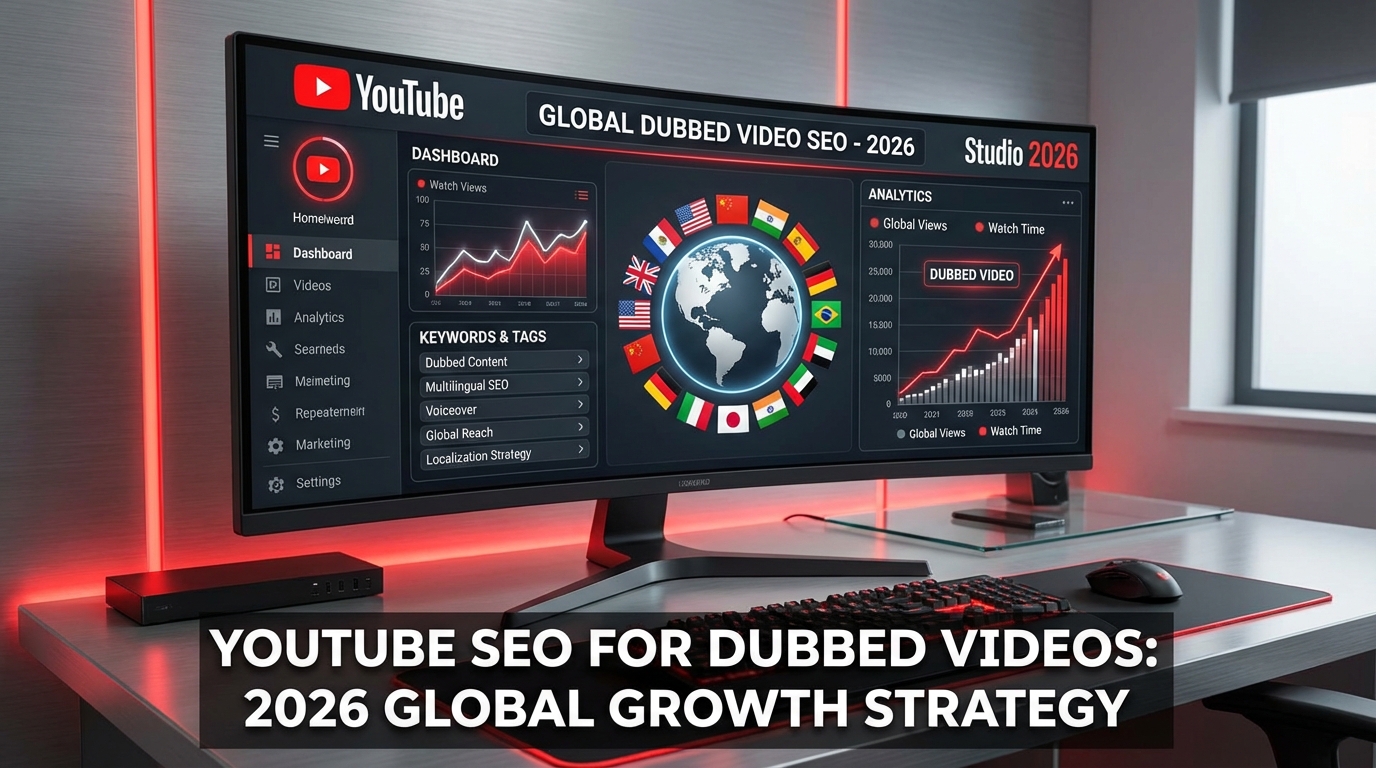
YouTube SEO for Dubbed Videos: Optimizing Titles, Tags, and Descriptions
Dubbing your videos is only half the work. I've seen too many creators invest time and money to create multi-language versions of their content, only to publish them with literally translated titles and descriptions copied from the original. The result? Videos that nobody finds. One of my Spanish dubbed videos was languishing at 2,000 views while the original had 50,000. Same content, same quality. The difference? The original was optimized for Italian keywords, the Spanish one simply had the title translated with Google Translate. After fixing the SEO, title, and description with appropriate Spanish keywords, that video reached 45,000 views in three months. In this guide, I'll show you exactly how to do this for every market. 🚀 Why SEO Changes for Each Language The most common mistake is thinking that translation is enough. But YouTube SEO doesn't work that way. Each market has: Different search volumes: "How to edit videos" has millions of monthly searches. The same query in other languages has a fraction. But proportionally, the smaller market keyword might be less competitive. Different search intents: German users search differently than Americans. More specific, more technical. Keywords reflect this difference. Different competitors: In English you compete with thousands of creators. In Brazilian Portuguese, you might be among the top 10 for keywords that would be impossible in English. Different trends: What's trending in one country might not be in another. Seasonal keywords vary.Important: YouTube is the second largest search engine in the world. Treating dubbed video SEO as a secondary activity means giving up most of the potential traffic.💡 The Optimization Framework Here's the process I use to optimize every dubbed video: Step 1: Keyword Research in the Target Language Don't translate keywords - research them from scratch. Here are the tools I use: YouTube Search Suggest: Start typing your topic in the YouTube search bar (with VPN set to the target country or in private mode). Suggestions show what users actually search for. Google Trends: Compare search volumes between countries and see seasonal trends. Use the "YouTube Search" filter. VidIQ/TubeBuddy: Both offer data on volumes and competition for YouTube keywords in different languages. Keyword Tool: The YouTube version shows long-tail keywords in any language. Step 2: Local Competitor Analysis Before optimizing, look at what successful creators do in that market:Search your main keyword on YouTube with target country VPN Analyze the top 10 results: How do they structure titles? How long are descriptions? What tags do they use? (VidIQ shows them) What do thumbnails look like?Identify common patterns and differentiation opportunitiesPro Tip: Create a document with best practices for each market. After a few analyses, you'll notice recurring patterns that will speed up future optimizations.📝 Title Optimization The title is the most important SEO element. Here's how to optimize it for each language. Effective Structure A good YouTube title follows this formula: [Main Keyword] + [Benefit/Curiosity] + [Specifier] Example: "How to Edit Videos in Premiere Pro - Complete Beginner Tutorial 2026" DON'T translate literally. Adapt to the market culture:Language Title Style ExampleEnglish (US) Direct, numbers, benefit "Video Editing in Premiere Pro: Complete Beginner Guide (2026)"Spanish More descriptive "Aprende a Editar Videos en Premiere Pro desde Cero - Curso Completo"Portuguese (BR) Colloquial, emoji ok "Como Editar Vídeos no Premiere Pro 🎬 Tutorial COMPLETO"German Precise, technical "Premiere Pro Tutorial: Videobearbeitung für Anfänger [2026]"Optimal LengthDesktop: Titles truncate after ~60-70 characters Mobile: ~50 visible characters Rule: Main keyword in the first 50 charactersMistakes to Avoid ❌ Literal translation with Google Translate ❌ Keyword stuffing (too many keywords) ❌ Clickbait that doesn't reflect content ❌ Generic titles without specific keywords ❌ ALL CAPS (except single words for emphasis) 📊 Description Optimization The description is where you can really differentiate SEO by market. Recommended Structure First 2-3 lines (visible without clicking "show more"):Main keyword Brief hook that encourages watching Call to action if relevantDescription body:Content summary (150-200 words) Secondary keywords integrated naturally Timestamps/chapters Links to mentioned resourcesFooter:Social links Relevant hashtags (3-5) Channel informationTemplate for Each Language English: Learn [MAIN KEYWORD] step by step in this complete tutorial.[2-3 sentences expanding content with secondary keywords]📌 TIMESTAMPS: 00:00 Introduction [timestamps]🔗 RESOURCES: [links]👉 SUBSCRIBE for more tutorials: [link]#keyword1 #keyword2 #keyword3Warning: Don't use the same translated descriptions for all videos. YouTube might penalize duplicate content. Customize at least the first 150 words for each video.🏷️ Tag Optimization Tags have lost importance over the years, but remain useful for:Helping YouTube understand context Appearing in "related videos" Handling common spelling errorsTag Strategy for Dubbed Videos Primary tags (3-5): Exact keywords you want to rank for Secondary tags (5-10): Variations and long-tail Brand tags (2-3): Channel name, series Common error tags (2-3): Alternative spellings of the keyword 🎨 Localized Thumbnails Thumbnails aren't technically SEO, but they impact CTR which influences ranking. When to Localize Thumbnails Always localize if:They contain text They show culturally specific examples The creator's face/expression might not work in that marketKeep the same if:They're purely visual without text The brand is recognizable and works globallyBest Practices by MarketMarket Thumbnail PreferencesUSA Expressive faces, large text, vivid colorsGermany More sober, focus on content, less clickbaitBrazil Vivid colors, emoji, exaggerated expressions OKSpain Similar to USA but slightly less "hype" tone📈 Monitoring and Iteration Optimization doesn't end at publishing. Metrics to Monitor For each dubbed video, track:Impressions (how many times thumbnail appears) CTR (click-through rate) Average retention Traffic sources (search vs. suggested vs. external)How to Interpret Data Low CTR (<4%) + High Impressions = Title/thumbnail not convincing High CTR (>8%) + Low Impressions = Keyword/SEO problem Low Retention (<30%) = Content doesn't match expectations created by title When to Optimize Again After 2-4 weeks from publishing:Analyze performance If CTR is low, test new title/thumbnail If impressions are low, review keywords and description YouTube allows changes - use them!Note: YouTube takes 2-4 weeks to "understand" a video. Don't make drastic changes in the first 7 days, let the algorithm do its initial work.✅ SEO Checklist for Dubbed Videos Before Publishing: Keyword research in target language completed Title optimized with keyword in first 50 characters Unique description (not translated) with natural keywords Appropriate tags for the market Thumbnail localized if it contains text Subtitles/CC in the correct languageAfter Publishing: Verify metadata is correct Add to appropriate playlists Share on target market social media Monitor performance after 2 weeks Optimize if necessary🎯 Conclusion Dubbing a video is just the first step. Without optimized SEO for each market, you're leaving most of the potential traffic on the table. The good news? Once you have a system, optimization becomes fast. Create templates for each language, maintain a keyword database, and the process will become a natural part of your workflow. Creators who take multilingual SEO seriously see 3-5x better results than those who just translate. The time invested in optimization pays off enormously. Start dubbing your videos with NovaDub and then apply these SEO strategies to maximize visibility in every market.Have questions about SEO for dubbed videos? Write to us at support@novadub.ai or leave a comment!